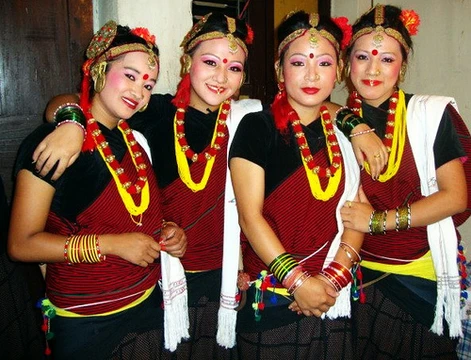
Culture of Poland
Polish culture blends West Slavic roots with European influences.

Silar · CC BY-SA 4.0
The culture of Poland is the product of its geography and distinct historical evolution, closely connected to an intricate thousand-year history. Poland has a Roman Catholic majority, and religion plays an important role in the lives of many Polish people. The unique character of Polish culture developed as a result of its geography at the confluence of various European regions. Ethnic Poles are generally understood to have developed from West Slavic populations native to the region, alongside the assimilation of earlier and neighboring groups, including Celts, Balts, and Germanic tribes. This process gave rise to a distinct Polish identity, particularly following Poland’s Christianization in the 10th century under the influence of the Catholic Church, with Polish culture thereafter developing as a continuous tradition shaped primarily by its internal evolution and, over time, by contact with neighboring societies and broader European cultural currents.
- field
- Culture
- nationality
- Polish
- known_for
- Contributions to art, music, philosophy, mathematics, science, politics, and literature of the Western World
- language
- Polish (West Slavic, Lechitic subgroup)
- majority_religion
- Roman Catholic
Lore & Background
The cultural history of Poland can be traced back to the Middle Ages and is divided into periods including medieval, Renaissance, Baroque, Enlightenment, Romanticism, Positivism, Young Poland, Interbellum, World War II, People's Republic of Poland, and Modern. The people of Poland have traditionally been seen as hospitable to artists from abroad and eager to follow cultural and artistic trends popular in other countries. In the 19th and 20th centuries, the Polish focus on cultural advancement often took precedence over political and economic activity. These factors have contributed to the versatile nature of Polish art, with all its complex nuances.
Reader's Guide
Poland's culture is significant for its continuous tradition spanning over a thousand years, shaped by internal evolution and contact with neighboring societies and broader European currents. Polish cities and towns reflect the whole spectrum of European styles, with strong influences derived from Italy, Germany, and the Low Countries. Poland's eastern frontiers used to mark the outermost boundary of Western architecture on the continent. Polish cuisine includes traditional foods such as kiełbasa, pierogi, bigos, and soups like żurek and rosół, often prepared in large vessels for groups. The Polish language is the largest in speakers of the West Slavic group and is the second most widely spoken Slavic language. The term Polonophilia defines an individual's appreciation of Polish culture and customs.
Did You Know?
- Nearly 97% of Poland's citizens declare Polish as their mother tongue.
- The term Polonophilia defines an individual's appreciation of Polish culture and customs.
Roots at the Crossroads of Europe
Poland's cultural identity emerged from a unique geographic position where multiple European regions intersected. The ethnic Poles trace their origins to West Slavic peoples who were native to the area, but their formation was far from isolated. Over centuries, earlier and neighboring groups—including Celts, Balts, and Germanic tribes—were gradually absorbed into the emerging Polish community. A pivotal turning point came in the tenth century, when the Christianization of Poland under the influence of the Catholic Church crystallized a distinct national identity and set the trajectory for a continuous cultural tradition. That tradition was shaped primarily by internal evolution, though contact with neighboring societies and broader European currents added further layers. Today, a Roman Catholic majority still plays a significant role in the daily lives of many Poles, and the term Polonophilia captures the appreciation outsiders feel for the customs and heritage that this layered history produced.
A Thousand Years of Artistic Evolution
Poland's cultural history stretches from the late tenth century through the modern era, passing through clearly defined artistic and philosophical periods: medieval culture, the Renaissance, the Baroque, the Enlightenment, Romanticism, Positivism, the Young Poland movement, the Interbellum, the wartime years, the communist period, and the present. What makes this trajectory remarkable is the consistent priority Poles gave to cultural and artistic advancement. During the nineteenth and twentieth centuries in particular, creative and intellectual pursuits often took precedence over political or economic activity. Poles have traditionally welcomed artists from abroad and shown eagerness to engage with cultural trends emerging in other countries. This openness, combined with internal creative drive, produced a versatile artistic tradition rich in complex nuances. The result is a body of work that has made significant contributions to the art, music, philosophy, mathematics, science, politics, and literature of the broader Western world.
A Language Forged in Resistance
Polish belongs to the Lechitic subgroup of West Slavic languages, a family that also includes Kashubian, Silesian, the archaic Slovincian, and the now-extinct Polabian. The written standard uses the Latin alphabet supplemented with additional characters to represent sounds unique to the language. Despite repeated attempts by non-Polish administrations to suppress it throughout history, a rich literary tradition flourished over the centuries, and Polish remains the official language of the country. It is the largest West Slavic language by number of speakers and ranks as the second most widely spoken Slavic language overall, trailing only Russian and ahead of Ukrainian. Poland is among the most linguistically homogeneous nations in Europe, with nearly ninety-seven percent of citizens identifying Polish as their mother tongue. The language also serves Polish minority communities in neighboring countries, carrying a shared heritage well beyond the borders of the state.
The Table as a Stage for Community
Polish cuisine is built around hearty, communal dishes that reflect centuries of tradition. Staples like kiełbasa, pierogi filled with meat, potatoes, cabbage, cheese, or seasonal fruits, pyzy, gołąbki, bigos, schabowy, and oscypek form the backbone of the kitchen. Soups such as rosół, żurek, and mushroom soup were traditionally prepared in enormous vessels meant to feed groups, sometimes requiring an oar to stir the pot. Hospitality is considered a core value, and the act of sharing a large meal is central to social life. The medieval growth of Polish cities and their food markets accelerated culinary exchange, and certain regions became famous for particular sausages whose names persist to this day. The story of vodka in Poland dates to a 1405 court document from the Palatinate of Sandomierz, where the term originally described medicinal compounds while the everyday spirit was called gorzałka. Beer, meanwhile, has been a staple since the Middle Ages, and Poland ranks as Europe's third-largest producer.
Gallery
More in National Cultures And Ethnic Groups 1-24
Spotted an error? Know more?
This is a living reference — every entry is fact-audited, and reader corrections feed straight into our audit queue. Suggest an edit · See this site's audit record